This Anti-Poverty Week, the ACT Council of Social Service (ACTCOSS) is calling for an official definition and measure of poverty in the ACT to better understand how many people are struggling and whether policies designed to help them are working.
One in seven Canberrans and one in six children are estimated to live in poverty, ACTCOSS says. The ANU’s Professor Sharon Bessell, an expert in child poverty, estimates that 7,000 to 8,000 children live in poverty in the ACT. But those were unofficial figures based on income, ACTCOSS CEO Dr Devin Bowles said: Australia does not have an official poverty measure.
“Without official measures, it is difficult to realise the extent of poverty, address the causes, and set targets to reduce it,” ACTCOSS policy manager Dr Jacob Priergaard said. “Around the world, 156 countries have official poverty measures that help to guide policies that support people doing it tough. Australia could and should follow suit.”
An increasing number of Canberrans are struggling to make ends meet, skipping meals, and not heating or cooling their homes, Dr Priergaard said. Professor Bessell’s research had identified food insecurity (difficulty getting healthy food); transport costs and inadequate public transport in outer suburbs; and poor-quality housing with expensive heating.
“The faces of poverty are changing,” Dr Bowles said. “In the community sector, we are seeing more and more working families presenting to crisis services, including food banks, as cost of living pressures continue to bite.
“As a community, we ought to be setting a standard of measurement and action that makes sure all of us get to live a decent life and put food on the table, even when we go through challenging times.”
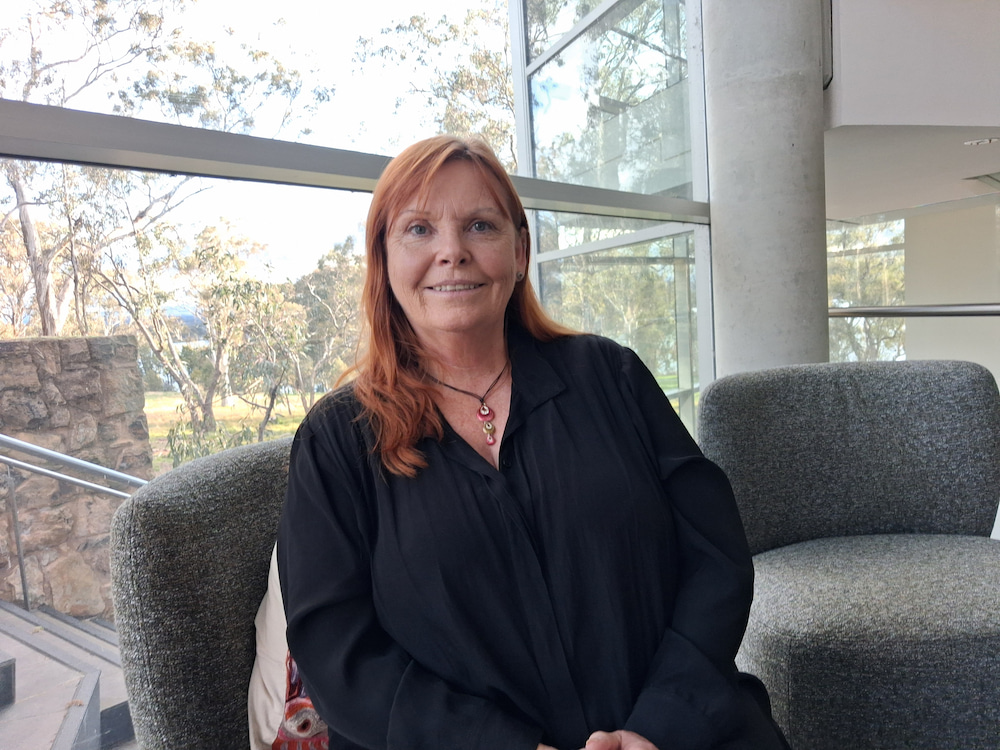
Poverty means children can never relax, Professor Bessell said.
“That stress of poverty is with them every moment of every day. It prevents them from being able to sleep. They’re tired in school; they can’t concentrate in school; they’re constantly guarding the possibility of judgment, and not letting others know what their situation is.”
An eight-year-old boy told her he often went hungry, but would not tell his mother he was.
“The reason he didn’t tell his mum was because when he said he was hungry, she would say, ‘Oh, you have mine, because I’m not hungry today’. And he said, ‘But I know she’s hungry because I can hear her tummy grumbling, and I know that if I say I’m hungry, she’ll give me her food. So I never tell her.’
“We hear that kind of scenario explained by children over and over again: they kept the impacts of poverty to themselves because they didn’t want to put more pressure on their parents, and they didn’t want their parents to sacrifice more for them.”
She argues that a child-specific measure was necessary to understand how poverty affects children’s education, relationships, and material wellbeing, and to track whether policies actually improved their lives.
“If we don’t know those things, we don’t know how to respond – and so we develop interventions for children that are not really based on evidence,” Professor Bessell said. “It also means that we’re not able to track over time whether we’re improving children’s lives, whether we’re reducing child poverty – or whether we’re not.”
Professor Bessell has developed a place-based, child-centred model designed to measure poverty based on children’s own experiences, rather than on income alone. This would allow governments and organisations to identify which specific dimensions are missing, rather than designing services around assumptions made by adults and professionals.
Her Material, Opportunity and Relationships (MOR) framework – developed through research with children aged six to 16 – measures whether children have material essentials such as secure housing, food, healthcare, utilities and transport (M); opportunities to learn, play, and participate in their communities (O); and supportive relationships with parents, carers, other adults and institutions (R).
“They’re the three dimensions that children have told us through our research really matter to them, and they’re the three dimensions of life that tend to be diminished dramatically when children are growing up in contexts of poverty,” Professor Bessell said. “The MOR framework measures the way in which poverty undermines the material basics for children, but also narrows their opportunities and puts pressure on the relationships that matter most to them.”
Roundabout Canberra CEO Hannah Andrevski said her organisation expected to support more than 6,000 children this year, and demand had increased by 20 per cent compared with last year. She said Roundabout could track how many families it helped, but not the overall level of need across Canberra. More reliable data would help both the government and the community sector address the need – including vulnerable families that sat just above the fixed poverty line.
“We don’t have a good measure on what we’re aiming for,” she said. “We don’t know what is the gap between the support that we’re delivering at Roundabout and the support that we should be aiming to deliver in order to make sure that every family in the ACT has the material essentials that they need for their children. We don’t understand that gap now because there is no reliable measure. What are we not doing in terms of the support that’s needed out there?”
St Vincent de Paul Society Canberra/Goulburn CEO Lucy Hohnen said a formal measure could give poverty greater prominence and help governments assess whether policies and interventions were working.
“We don’t have an understanding of what policies, what interventions, what we should be aiming for, what we should be measuring,” Ms Hohnen said. “If we’re measuring performance against a set of criteria or a framework, then we’re going to understand it more deeply and concentrate more deeply.”
Communities at Work executive manager Chloe Brewer said poverty should be measured more broadly than income alone, because financial hardship can overlap with educational disadvantage and social isolation.
“We need it because until we look at poverty as that multi-dimension, we’re only going to have policies that try to address one aspect at a time,” Ms Brewer said.
Professor Bessell said the ACT’s small size meant it was well placed to identify pockets of child poverty and to target support where it was needed.
“We have the potential to seriously reduce child poverty and perhaps end it.”