St John the Baptist Church in Reid – the oldest surviving public building and the oldest church in Canberra city – reminds amateur historian Sue O’Leary of a Midsomer Murders set. Nicknamed ‘the Westminster Abbey of Canberra’, the sandstone church is set in a quiet churchyard surrounded by conifers.
But there’s no risk of meeting a fête worse than death, or finding strychnine in the Devonshire tea, at the church’s Community Fair this Saturday, 17 October.
“It’s as good a day out as you’ll find in Canberra,” senior associate priest Dr Andrew Cameron says. “There’s plenty to do; plenty to see; plenty to hear.”
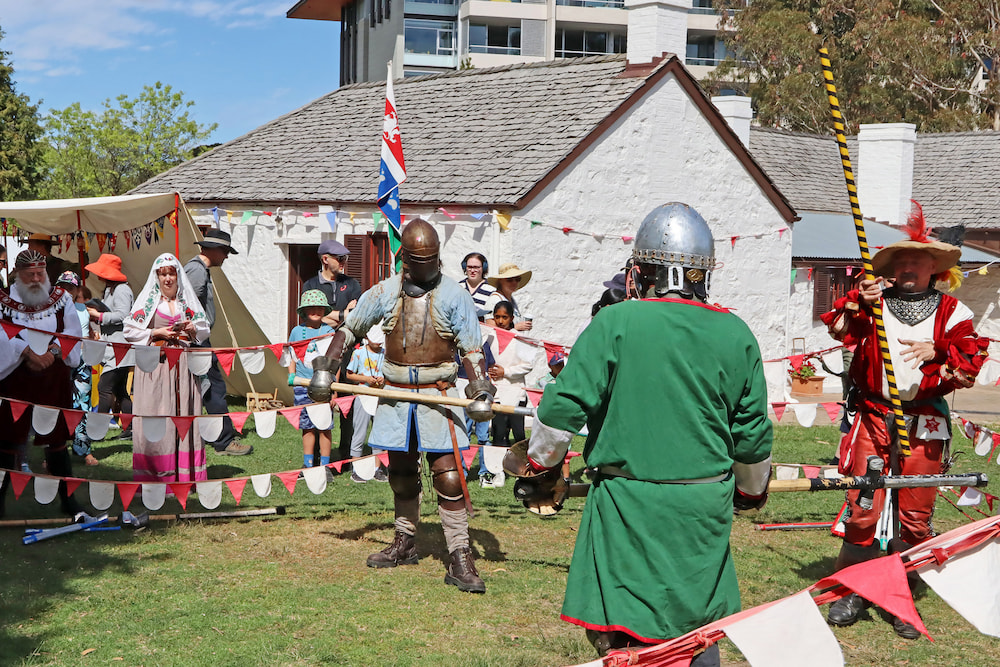
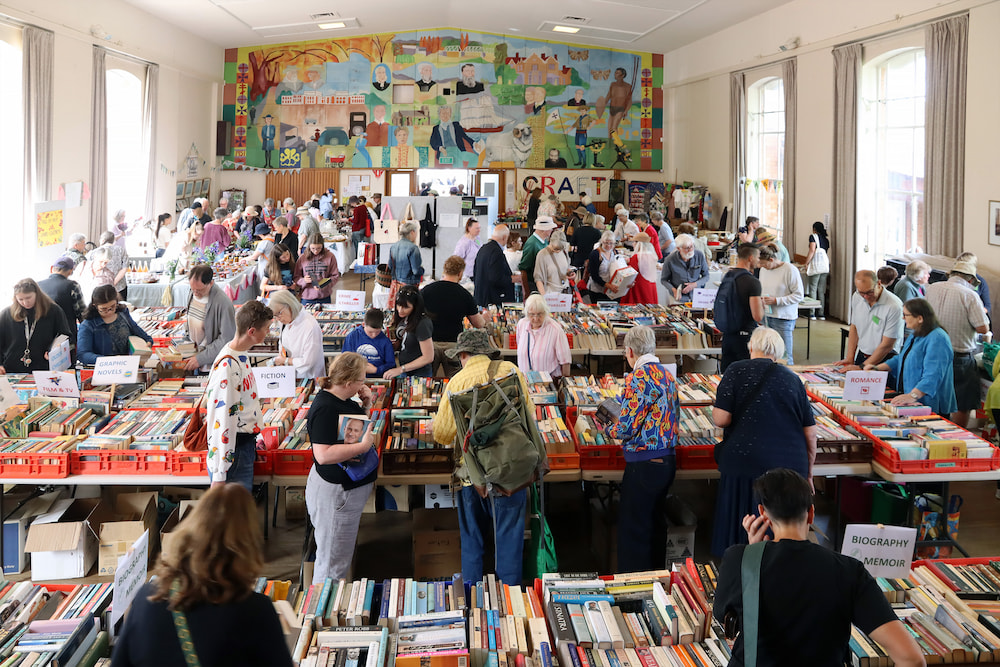
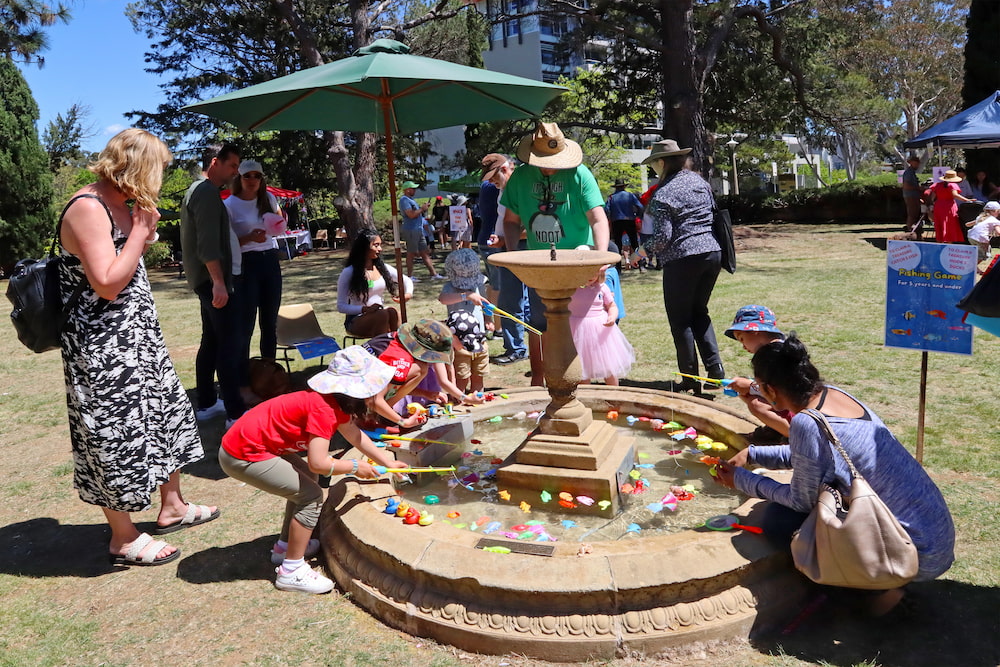
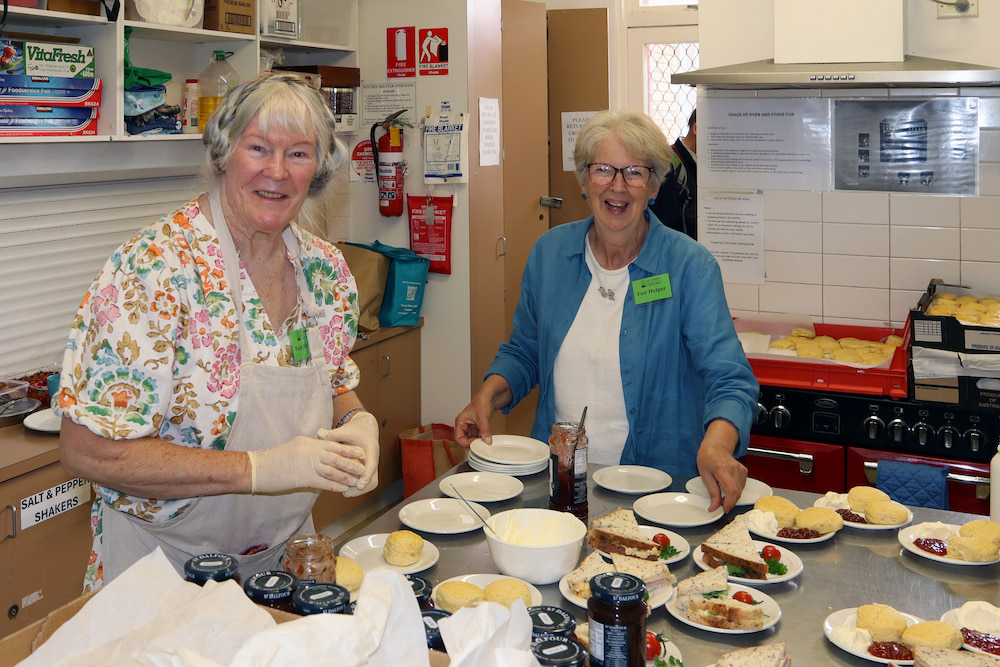
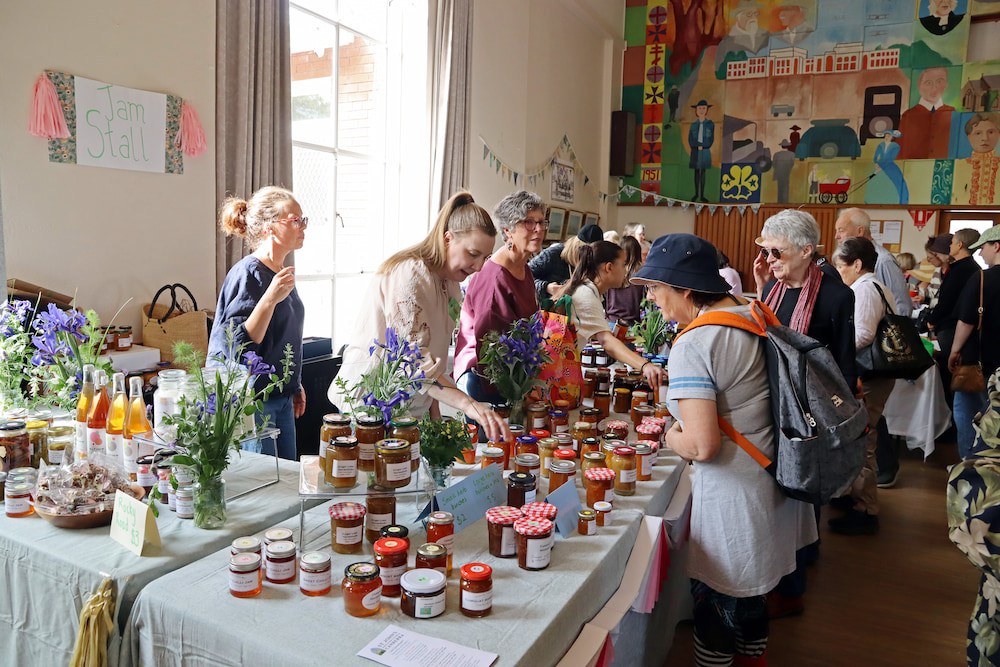
There will be a mediaeval tournament, and mediaeval arts and crafts; displays by emergency services; pony rides; reptiles; classic cars; and a jumping castle. Stalls selling books, CDs, and DVDs; plants; cakes and jams; clothing and craft. Thai and Filipino food stalls; a sausage sizzle; coffee and gelato. Jazz bands, pipes and drums, choirs, mandolins, organ recitals, and bells ringing the changes on familiar tunes every hour. Tours by the Royal Military College Duntroon Guides. And more.
The fair will be held at St John’s, 45 Constitution Avenue, Reid, from 9am to 2pm. Admission is free.
Some 60 volunteers have worked for months to organise the fair, which they say will be a day of connection, fun, and community – and some 4,000 people are expected to attend.
Dr Cameron first went to the fair in 2023. “It blew me away – it was easily the best kind of thing like this that I reckon I’ve ever seen. Just such variety to it, such energy to it, such a happy atmosphere to it.”
People from all walks of life, all beliefs and none are welcome, Dr Cameron said: the event is intended for wider Canberra.
The church itself, Ms O’Leary says, is “the heart of Canberra, but it’s also a sanctuary for people”. Built in 1845, it predates the naming and construction of Canberra by seven decades.
“Often people think Canberra’s history started when it became a capital city, but it didn’t,” Ms O’Leary said. “It has a far deeper history. The history here is probably older than that of Melbourne.”
The church was built on land donated by Robert Campbell, a merchant and politician, of Duntroon; he paid for half the cost of the church’s construction. Campbell thought the area was a bit of a wilderness, Dr Cameron said, and the church became the “voice of one crying out in the wilderness” (John 1:23).
While he could have built a chapel on his estate, he wished the church to serve the little community of Ainslie, and cater for the spiritual needs of the entire area, Ms O’Leary said. Worried about a lack of education, he built a schoolhouse – now a museum – on the site the following year.
Today, Dr Cameron describes St John’s theological position as Middle Church Anglican. The parishioners include judges, doctors, lawyers, architects, businesspeople, diplomats, soldiers, scientists, and archaeologists, Ms O’Leary says.
The churchyard is Canberra’s oldest graveyard; more than 900 people are buried here, from the colonial period to the mid-20th century.
“The churchyard is not just about the headstones – it’s about the stories that go with those headstones,” Ms O’Leary said. “Even the areas that don’t have headstones, there’s always an underlying story. It’s just full of incredible stories about the people who lived here and the cross-section of people who were buried here, from workers to property owners to mothers, fathers, grandfathers.”
Two Governors-General – Viscount Dunrossil and Major-General Jeffery – are buried here, the former next to a servant, Elsie McGinnis. “In death, you’re all equal,” Ms O’Leary says. Here, too, are Sir Robert Garran, Solicitor-General and founder of the public service; and First Nations police tracker Edgar Spring. More than 50 ex-servicemen are buried on the site; some fought at Gallipoli.
There is the grave of Flying Officer Francis Ewing, who died in a crash on 9 May 1927, the day Parliament House was opened. Two Clerks of the House of Representatives died within months of each other: Walter Gale suffered a fatal heart attack a couple of months after the building opened; his protégé Robert McGregor collapsed with a cerebral haemorrhage in the House itself, while the motion of condolence for Gale was being read. The two men were buried near each other, on the closest side of the churchyard to Old Parliament House.
The church contains windows with mediaeval glass a chaplain collected from French and Belgian churches damaged during World War I; a stained-glass window honouring Sister Frances May Hayman, a missionary nurse killed by Japanese soldiers in Papua New Guinea; a reconciliation cross, an apology from the Bishop of Japan after World War II; and an organ designed and built by Ronald Sharp, the creator of the Sydney Opera House’s organ.
The first rector, George Gregory, is buried in the crypt. He drowned trying to cross the Molonglo River in flood (near what is now the Albert Hall) shortly before his wedding.
The Schoolhouse Museum – the first combined school and teacher’s residence built on the Limestone Plains – is now a history hub. In addition to archival photographs and documents, it has a reconstructed classroom; a kitchen; and a rather alarming Victorian medicine chest: half the remedies in it are toxic, such as syrup of squill, made from a plant now used in rat poison. The museum will be open for tours on Saturday.
Funds raised at the fair will go into the church’s operating budget, including maintaining the heritage building and site. Dr Cameron sees his team as stewards of the site.
“The community has an ownership in the good of that building,” Dr Cameron said. “We want it to remain standing for several generations. It is a money pit, so we’ve got to look after it.”
Beyond fundraising, St John’s Care, the church’s outreach charity, provides emergency relief and support to people facing disadvantage, isolation, and financial hardship. Many people are seeking support for the first time. To donate, visit https://www.stjohnscare.org.au/donate.
The St John’s Community Fair is sponsored by Griffith Butchery and Silo Bakery, Kingston.