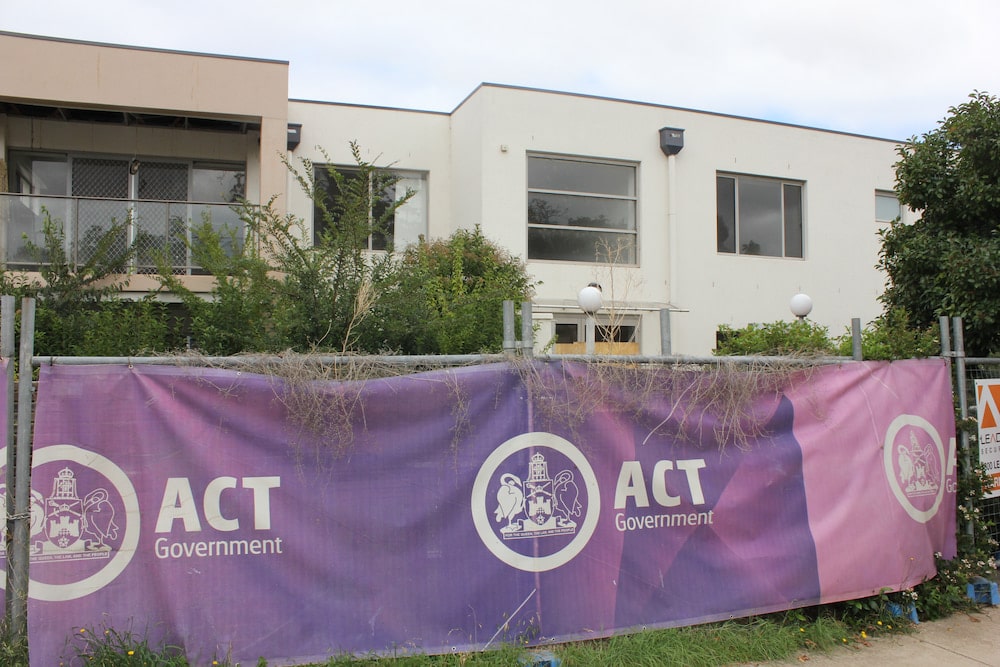
Public housing tenants have been left waiting months for urgent repairs, sometimes living with mould and leaking rooves, according to a new report from the ACT Ombudsman.
The report, Falling through the gaps: How Housing ACT manages tenant requests for repairs to their homes, examined complaints made between July 2024 and November 2025 and found delays in completing repairs, poor communication between Housing ACT, tenants and contractors, and cases where tenants were charged for work without warning.
The Ombudsman said these failures meant Housing ACT had not always met its legal obligations as a landlord under the Residential Tenancies Act 1997, which requires rental properties to be well maintained and that repairs be completed in a timely manner.
Housing ACT is the largest landlord in the Territory, managing more than 11,000 public housing properties and providing accommodation for many vulnerable residents, including people experiencing financial hardship, disability, domestic violence or caring responsibilities.
The investigation found some tenants were left waiting long periods for repairs despite serious safety issues in their homes. In some cases, tenants were not told what was being done to address problems for months.
The report comes as the ACT prepares to recognise housing as a human right from 2027, following legislation passed by the ACT Government in September 2025.
ACT Government accepts recommendations
In its formal response, the ACT Government said Housing ACT accepted all eight of the report’s recommendations, which focus on improving timeliness, communication, resolving complaints, and quality assurance.
Kareena Arthy, Director-General of the Health and Community Services Directorate, said Housing ACT would work with Infrastructure Canberra and its maintenance contractor to implement the recommendations.
Infrastructure Canberra became responsible for managing the repairs and maintenance contract for public housing in 2025. The ACT Government has also committed to bringing repairs and maintenance services in-house after its contract with Programmed Facilities Management ends in December 2027.
“Housing ACT has an important role in delivering social housing, often to vulnerable members of the Canberra community,” Ms Arthy said. “As an organisation, it endeavours to ensure it provides support and services that are robust, reliable and easy to navigate.”
As Housing ACT has 11,078 public housing properties in its portfolio, it receives a significant volume of requests for services each year, Ms Arthy said. In 2023-24, 50,291 work orders were raised for repairs and maintenance, including 320 first-level complaints (less than 0.6 per cent).
“Housing ACT will continue to review processes and practices to ensure appropriate responses to tenant requests occur,” Ms Arthy said.
Ms Arthy said improvements already underway included changes to processes and procedures, staff training and governance arrangements following machinery-of-government changes.
Community sector welcomes timely attention to housing maintenance
ACT Shelter, Advocacy for Inclusion, and the ACT Council for Social Service (ACTCOSS) welcomed the report and increased focus and attention to housing modification and rectification.
Corinne Dobson, CEO of peak housing body ACT Shelter, said: “The Ombudsman’s report lays bare a deeply troubling reality, with public housing tenants left living in unsafe and unacceptable conditions for months, and without clear communication or accountability.
“People are not asking for diamond-plated jacuzzis — this is about meeting basic requests to address bathrooms and ceilings with black mould, doors that will not open, and housing that is unsafe or unhealthy.
“Housing ACT is the Territory’s largest landlord, and it has clear legal and ethical responsibilities to ensure homes are safe and properly maintained.
“ACT Shelter believes the Ombudsman’s recommendations must now be implemented fully and transparently to restore confidence and ensure tenants are treated with the respect they deserve.”
Advocacy for Inclusion has highlighted issues with the timing, sequency and quality of modification work since well before it was revealed that the ACT had missed out on large sums of money that could have been accessed through Specialist Disability Accommodation for some housing needs, head of policy Craig Wallace said.
“We have reports of people waiting months for bathroom renovations and minor physical works, like the removal of a small internal step, which would enable them to feel safe at home. Disabled people are not wanting Grand Designs, but they are wanting modifications, and also to know about access to basic comforts like airconditioning. Some people are living in ghastly conditions — this can happen slowly, but also tips into crisis.”
Dr Devin Bowles, CEO of ACTCOSS, said: “Safety, and housing and home are two of the themes in the ACT government’s wellbeing indicators which are designed to drive investment responses.
“As we head towards the ACT Budget, we are joining with peak bodies like ACT Shelter and AFI to call for timely, adequate and sustained improvements to the time it takes to complete modifications and rectification work for all Housing ACT tenants – especially those which are necessary to ensure someone can stay in their home. Improving the social housing system is a focus of our Budget submission for 26/27.”
Critics say failures are unacceptable
Independent MLA Thomas Emerson said the report’s “damning” findings were unsurprising — public housing was the number one issue constituents raised with his office.
“How can we celebrate being the most progressive state or territory in the country while failing the most vulnerable members of our community on so many fronts?” Mr Emerson said.
“Most Canberrans would be shocked at the living conditions experienced by many public housing tenants in our community,” said Mr Emerson.
“My office has been trying to assist an elderly woman who’s been without hot water for almost two weeks, and hasn’t seen any action despite having contacted her housing manager, the contractor and the Minister’s office.
“I’ve been contacted by people living with mice infestations, black mould, crumbling ceilings, overflowing sewage – this is completely unacceptable in Australia’s wealthiest jurisdiction.”
The ACT’s public housing stock is in the second-poorest condition in the country, Mr Emerson said: 29 per cent of dwellings were deemed to be of an unacceptable standard, according to data released on 29 January 2026.
“It’s appalling that almost a third of our public housing dwellings do not have at least four working facilities and fewer than three major structural defects,” Mr Emerson said.
“While I welcome the ACT Government’s pre-existing commitment to insource public housing repairs, I don’t see that alone being sufficient to address these shameful statistics.”
Canberra Liberals
The Canberra Liberals called on the Government to immediately implement all Ombudsman recommendations and clear the maintenance backlog as a matter of urgency.
Chiaka Barry, Shadow Minister for Social Housing and Homelessness, said the Ombudsman’s findings showed a culture of complacency within Housing ACT.
“This is not an isolated administrative oversight, it is a systemic failure of oversight, accountability and basic service delivery,” Ms Barry said.
“The Residential Tenancies Act applies equally to private landlords and the ACT Government, yet this report shows the Government is failing to meet the very standards it expects others to follow. Public housing tenants deserve safe, well-maintained homes. Instead, they’ve been left to chase repairs through a broken system.”
Canberra Liberals leader Mark Parton said the findings reflect broader financial mismanagement identified in the Interim Report to the Legislative Assembly Select Committee on the Fiscal Sustainability of the ACT.
“As Saul Eslake warned, this Government’s policy choices have weakened the Territory’s fiscal position over the past decade. Canberrans are paying more and getting less, less accountability, less efficiency, and poorer services,” Mr Parton said.
“This report makes it crystal clear: Housing ACT has failed the very people it is meant to protect. Tenants are living with mould, leaks and safety hazards while this ACT Labor Government hides behind process and paperwork.”
ACT Greens
ACT Greens leader Shane Rattenbury said the report suggested public housing tenants were being treated as “second-class citizens”.
“For too long, serious maintenance failures have been allowed to persist while the government looks the other way instead of stepping up to meet basic responsibilities.
“It is hard to avoid the conclusion that public housing tenants are being treated as second-class citizens by this government. Urgent repairs are dragging on for months. Basic maintenance is falling through the cracks. And nothing is being done about it.
“The government knows this, and the result is a system where unacceptable standards are tolerated because the people affected are least able to fight back.
“If a private landlord behaved this way, they would quite rightly find themselves before ACAT. The difference is that many public housing tenants, quite fairly, don’t have the time, resources or confidence to navigate complex complaints processes.
“The report outlines a shocking example of a tenant left without a proper roof for more than a year. That is not a minor oversight, it is a profound failure. It speaks to years of underinvestment and a culture that has not treated public housing with seriousness.
“The Greens will be scrutinising the government’s response closely. What we need now isn’t spin, it’s a shift in attitude and investment in new and existing public homes.
“Public housing is not a charity or an afterthought. It is an essential public service, and it should be delivered to the highest standard, as any Canberran has a right to expect.”