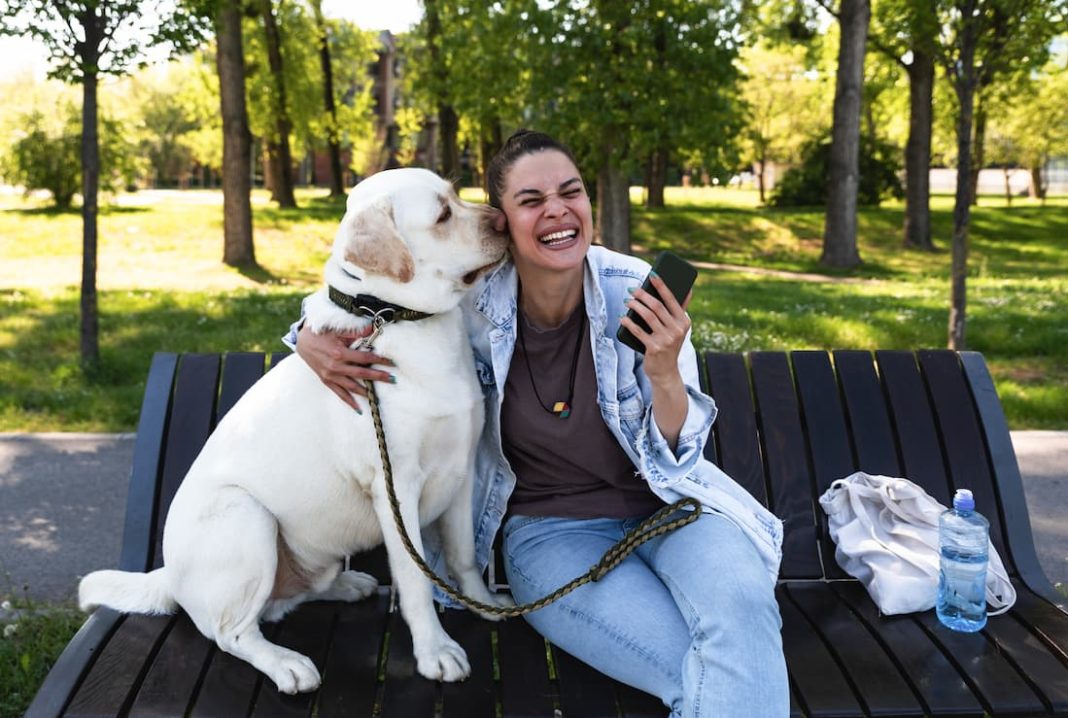
As a clinical psychologist, much of my work focuses on relationships: how we connect, attach, cope, and regulate our emotions in the context of other people. Increasingly, however, clients speak to me about relationships that don’t involve humans at all. They talk about their dogs, cats, horses, and other animals, often hesitantly, as though these relationships might somehow be less valid. But they are not.
From a psychological perspective, relationships with pets can play a significant role in emotional regulation, attachment, and mental health. For many people, pets provide a consistent, non-judgemental presence that is difficult to find elsewhere. They respond to us without evaluating our worth, productivity, appearance, or emotional performance, something many of us, particularly those who struggle with anxiety, depression, trauma, or perfectionism, find deeply soothing.
Research consistently shows that interacting with pets can reduce physiological markers of stress, including cortisol, while increasing oxytocin, a hormone associated with bonding, safety, and calm. This is not simply a comforting idea; it is a measurable biological response. When people instinctively reach for their pet during moments of distress, their nervous system is doing exactly what it is designed to do, seeking regulation through safe connection.
Pets also provide routine and behavioural activation, both of which are foundational to good mental health. When someone is depressed or overwhelmed, motivation is often the first thing to disappear. Pets create an external structure that requires engagement regardless of mood. Feeding, walking, grooming, and caring for another living being can act as a protective factor, helping people stay connected to daily life when they might otherwise withdraw.
Importantly, pets can also play a subtle but meaningful role in supporting body image and eating disorder recovery, an area I specialise in. Animals relate to bodies in functional, rather than aesthetic, ways. They do not judge size, shape, weight, or appearance, they respond to movement, presence, energy, and care. For people who are highly self-critical about their bodies, this can be quietly corrective. Caring for a pet can also help shift focus away from appearance and towards nourishment, routine, and bodily needs. I often see that when clients are feeding their pets regularly, walking them, and responding to their physical cues, it becomes easier to extend some of that same care and consistency to themselves.
Pets can provide socialisation too through meeting other dog walkers, seeing familiar faces at local parks, having brief conversations with others and sharing information about our pets with others.
Pet ownership also comes with grief. Pets age, become unwell, and eventually die. The grief that follows can be profound, particularly for individuals who rely heavily on their pet for emotional support.
It is also important to say that pets are not a substitute for human relationships or professional mental health care. They cannot meet all emotional needs, nor should they be expected to. However, they can be a powerful adjunct to psychological wellbeing, offering comfort, routine, connection, and emotional grounding.